Learn how kimjang earned UNESCO status and find a kimjang experience this autumn
Key Takeaway
Kimjang is making kimchi together and sharing it with neighbors. UNESCO listed it in 2013. Ipdong falls on November 7, 2026, and Goesan holds a kimjang festival from November 5 to 8.
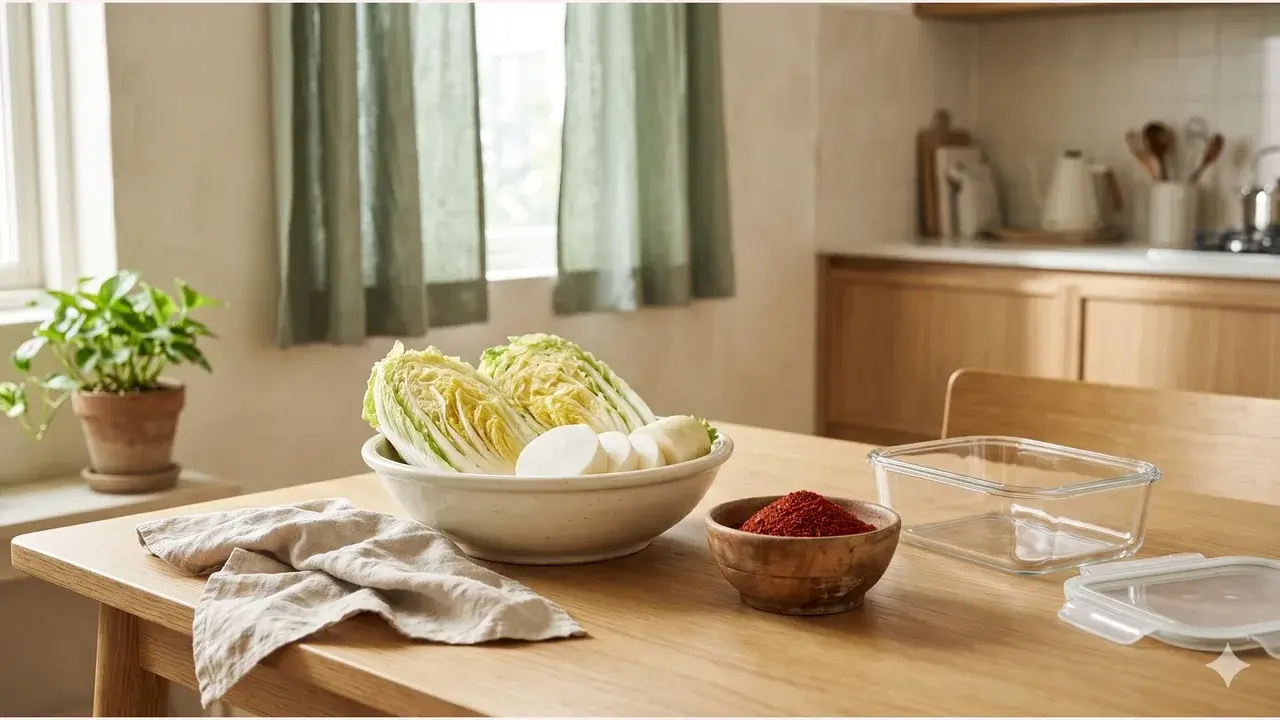
If you plan to introduce kimchi to a friend from abroad, start with what UNESCO recorded and the two experiences you can join this year.
What exactly did UNESCO list?
The inscription is titled "Kimjang, making and sharing kimchi in the Republic of Korea." In 2013, kimjang, meaning the making and sharing of kimchi, was added to the Representative List of the Intangible Cultural Heritage of Humanity.
In Korea, "Making Kimchi" was designated National Intangible Heritage on November 15, 2017. The Encyclopedia of Korean Culture gives the community spirit of cooperation and sharing among families, clans, villages and neighbors as the reason.
In what order do households prepare for kimjang through the year?
According to UNESCO, preparation starts long before winter.
| Season | What households prepare |
|---|---|
| Spring | Buy shrimp, anchovies and other seafood and salt-ferment them |
| Summer | Buy sea salt for brining the cabbage |
| Late summer | Dry red chili peppers and grind them into powder |
| Late autumn | Kimjang season, when people gather to make large quantities |
The Encyclopedia of Korean Culture says a large batch was made around Ipdong, the start of winter, to eat from winter through spring. Data from the Korea Astronomy and Space Science Institute puts Ipdong on Saturday, November 7 in 2026.
Why is kimjang called a culture of sharing?
UNESCO explains that neighbors make large quantities together in kimjang season so every household has enough kimchi for the long, harsh winter. It also lists the custom of exchanging kimchi among households. Methods and ingredients are passed down within families, typically from a mother-in-law to a newly married daughter-in-law.
The Encyclopedia of Korean Culture also says making kimchi builds bonds among family, relatives, villages and neighbors and shapes a shared identity.
Where can you try kimjang this autumn?
The Ministry of Culture, Sports and Tourism lists the 2026 Goesan Gimjang Festival. It runs from November 5 to 8, daily from 10:00 to 20:00, around the Goesan Organic Expo Plaza, and Goesan County hosts it. Admission is free, and only some experiences carry a partial fee of KRW 5,000.
| Program | How it is described |
|---|---|
| One-stop kimjang | Receive pre-booked salted cabbage and filling, mix them and take the kimchi home |
| Drive-through kimjang | Park at an individual booth in Goesan Stadium and load the finished kimchi into your car |
| World kimchi tasting | Taste kimchi from several countries |
| Village kimjang experiences | Held in Goesan villages throughout November, separate from the festival grounds |
For something closer to Seoul, the city held the Korea Kimjang Festival at the aT Center in Yangjae-dong on November 22, 2025. It had a kimchi culture hall, a kimchi sales hall and a direct market for kimjang ingredients. Space was limited, so there was no hands-on kimchi making for the public. Check the Seoul city website for this year's schedule.
What should you check before you go?
The festival notice says only that one-stop kimjang requires pre-booking the salted cabbage. It does not say how or when to book, or which experiences carry the fee. Open the festival website, gimjang.kr, or call the Goesan County Festival Committee at 043-830-3463. The organizer says it may change the event, so check again the day before you leave.
If you are going with a friend from abroad, ask in the same call whether there are eligibility rules or guidance in other languages. One-stop and drive-through kimjang are take-home formats, so decide on a container and a way to carry the kimchi in advance.
Frequently Asked Questions
Is it kimchi itself that UNESCO listed?
UNESCO listed kimjang, the custom of making kimchi together and sharing it. It was inscribed on the Representative List of the Intangible Cultural Heritage of Humanity in 2013.
When do people make kimjang?
UNESCO describes late autumn as kimjang season, and the Encyclopedia of Korean Culture says a large batch was made around Ipdong to last from winter through spring. Ipdong falls on November 7 in 2026.
Does the Goesan Gimjang Festival charge admission?
The Ministry of Culture, Sports and Tourism lists admission as free. Some experiences carry a partial fee of KRW 5,000, but the page does not say which ones, so ask the Goesan festival committee before you sign up.
Sources & Verification Date
- UNESCO: Kimjang, making and sharing kimchi in the Republic of Korea (2013 Representative List inscription) · Verified
- Encyclopedia of Korean Culture: Making Kimchi (National Intangible Heritage, designated 2017-11-15) · Verified
- Ministry of Culture, Sports and Tourism festival information: Goesan Gimjang Festival (2026-11-05 to 08) · Verified
- Seoul Metropolitan Government: 2025 Korea Kimjang Festival notice · Verified
- Korea Astronomy and Space Science Institute: 2026 solar terms calendar data · Verified